



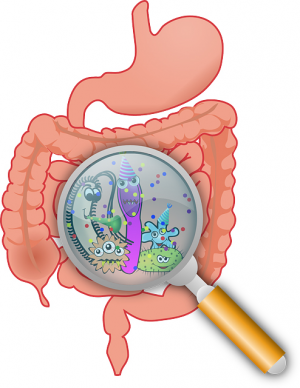
Zespół jelita drażliwego (ang. Irritable bowel syndrome – IBS) i dyspepsja czynnościowa (Functional dyspepsia – FD) należą do grupy czynnościowych zaburzeń przewodu pokarmowego klasyfikowanych według Kryteriów Rzymskich IV. Są to przewlekłe schorzenia o nieznanej, wieloczynnikowej etiologii. Uważa się, że ważnym czynnikiem wpływającym na obecność objawów jest występowanie dysbiozy jelitowej. Szacuje się, że choroby te mogą występować odpowiednio nawet u 20% i 40% populacji. U chorych powodują znaczne pogorszenie jakości życia i są częstą przyczyną absencji chorobowych. Diagnostyka i leczenie tych chorób jest dużym wyzwaniem dla zespołu wielodyscyplinarnego.
Proces diagnostyczny polega na obserwowaniu i potwierdzeniu występowania dolegliwości i wykluczeniu somatycznych przyczyn. Terapia powinna obejmować farmakoterapię, warto dołączyć też prebiotyki, probiotyki (w połączeniu nazywane są synbiotykami) oraz preparaty ziołowe. Łączenie różnych form leczenia zmniejsza objawy choroby, przy czym nie obserwuje się poważnych działań niepożądanych. Korzyści u takich pacjentów często można osiągnąć przez stosowanie leków przeciwdepresyjnych (trójcykliczne leki przeciwdepresyjne –TLPD i selektywne inhibitory wychwytu serotoniny – SSRI) oraz leczenie psychologiczne (psychoterapia, hipnoterapia, terapia behawioralno-poznawcza). Badania naukowe potwierdzają, że mimo stosowania kompleksowego leczenia, u części pacjentów nie przynosi ono oczekiwanego efektu.
Dostępne są różne formy leczenia. Typowa farmakoterapia skupia się na zmniejszaniu objawów chorobowych, takich jak biegunka, zaparcia, bóle brzucha. Stosowane do tych celów preparaty zazwyczaj wpływają tylko na jeden z objawów. W tej sytuacji często konieczne jest łączenie różnych leków. Wsparciem w opanowaniu objawów chorobowych mogą być prebiotyki, probiotyki (ich połączenie nazywamy synbiotykami), preparaty ziołowe. Należy pamiętać, że są to bezpieczne połączenia […]
Autor: lek. Norbert Nowak
Data publikacji: 2020-02-19
Źródło: "Lek w Polsce" nr 01/2020
Słowa kluczowe: zespół jelita drażliwego, dyspesja czynnościowa, probiotyki, zioła, IBS
1. Drossman D.A., Hasler W.L. Rome IV-Functional GI Disorders: Disorders of Gut-Brain Interaction. Gastroenterology 2016; 150: 1257−1261.
2. Mulak A., Smereka A., Paradowski L., Nowości i modyfikacje w Kryteriach Rzymskich IV, Gastroenterologia Kliniczna 2016, tom 8, nr 2, 52–61.
3. Skrzydło-Radomańska B., „Co nowego w IBS – algorytmy postępowania”, Klinika Gastroenterologii, Uniwersytet Medyczny w Lublinie,
http://www.gastrohepat.rzeszow.pl/web_documents/algorytm_ibs_rzesz_w_2017.pdf, data dostępu: 22.08.2018.
4. Halpert A, Dalton CB, Palsson O, et al. What patients know about irritable bowel syndrome (IBS) and what they would like to know. National Survey on Patient Educational Needs in IBS and development and validation of the Patient Educational Needs Questionnaire (PEQ) Am J Gastroenterol. 2007;102(9):1972–1982.
5. Schoenfeld P., Advances in IBS 2016: A Review of Current and Emerging Data, Gastroenterol Hepatol (N Y). 2016 Aug; 12(8 Suppl 3): 1–11.
6. Simrén M, Månsson A, Langkilde AM, et al. Food-related gastrointestinal symptoms in the irritable bowel syndrome. Digestion. 2001;63(2):108–115.
7. Halmos EP, Power VA, Shepherd SJ, Gibson PR, Muir JG. A diet low in FODMAPs reduces symptoms of irritable bowel syndrome. Gastroenterology. 2014;146(1):67–75.e5.
8. Brandt LJ, Chey WD, Foxx-Orenstein AE, et al. American College of Gastroenterology Task Force on Irritable Bowel Syndrome. An evidence-based position statement on the management of irritable bowel syndrome. Am J Gastroenterol. 2009;104(suppl 1):S1–S35.
9. Soltani et al., Food Item Avoidance of Patients with Irritable Bowel Syndrome Compared with Healthy People.,Arch Iran Med.2019 Jul 1;22(7):369-375.
10. Dong Y, Baumeister D, Berens S, Eich W,Tesarz J, High Rates of Non-Response Across Treatment Attempts in Chronic Irritable Bowel Syndrome: Results From a Follow-Up Study in Tertiary Care., Front Psychiatry. 2019 Oct 2;10:714. doi: 10.3389/fpsyt.2019.00714. eCollection 2019.
11. Liu YW et al., Lactobacillus plantarum PS128 Ameliorated Visceral Hypersensitivity in Rats Through the Gut-Brain Axis., Probiotics Antimicrob Proteins. 2019 Nov 5. doi: 10.1007/s12602-019-09595-w. [Epub ahead of print].
12. Appleton L, Day AS. ,Re: A Meta-Analysis of the Clinical Use of Curcumin for Irritable Bowel Syndrome., J Clin Med. 2019 Nov 6;8(11). pii: E1885. doi: 10.3390/jcm8111885.
13. Di Ciaula, A.; Portincasa, P.; Maes, N.; Albert, A. Efficacy of bio-optimized extracts of turmeric and essential fennel oil on the quality of life in patients with irritable bowel syndrome. Ann. Gastroenterol. 2018, 31, 685–691.
14. Holvoet T, Joossens M, Wang J, et al. Assessment of faecal microbial transfer in irritable bowel syndrome with severe bloating. Gut. 2017;66:980–982.
15. Mazzawi T, Lied GA, Sangnes DA, et al. The kinetics of gut microbial community composition in patients with irritable bowel syndrome following fecal microbiota transplantation. PLoS One. 2018;13:e0194904.
16. Hadjivasilis A et al., New insights into irritable bowel syndrome: from pathophysiology to treatment., Ann Gastroenterol. 2019 Nov-Dec;32(6):554-564. doi: 10.20524/aog.2019.0428. Epub 2019 Oct 22.
17. Holtmann GJ, Ford AC, Talley NJ. Pathophysiology of irritable bowel syndrome. Lancet Gastroenterol Hepatol. 2016;1:133–146.
18. Ford AC, Moayyedi P, Chey WD, et al. ACG Task Force on Management of Irritable Bowel Syndrome. American College of Gastroenterology Monograph on Management of Irritable Bowel Syndrome. Am J Gastroenterol. 2018;113:1–18.
19. Sunderland R. Irritable bowel syndrome in adults:symptoms, treatment and management. Nurs Stand. 2017;31:52–63.
20. Ford AC, Talley NJ, Schoenfeld PS, Quigley EM, Moayyedi P. Efficacy of antidepressants and psychological therapies in irritable bowel syndrome:systematic review and meta-analysis. Gut. 2009;58:367–378
21. Johannesson E, Simrén M, Strid H, Bajor A, Sadik R. Physical activity improves symptoms in irritable bowel syndrome:a randomized controlled trial. Am J Gastroenterol. 2011;106:915–922.
22. Tong K, Nicandro JP, Shringarpure R, Chuang E, Chang L. A 9-year evaluation of temporal trends in alosetron postmarketing safety under the risk management program. Therap Adv Gastroenterol. 2013;6:344–357.
23. Chang L, Lembo A, Sultan S. American Gastroenterological Association Institute Technical Review on the pharmacological management of irritable bowel syndrome. Gastroenterology. 2014;147:1149–1172.e2.
24. Ruepert L, Quartero AO, de Wit NJ, van der Heijden GJ, Rubin G, Muris JW. Bulking agents, antispasmodics and antidepressants for the treatment of irritable bowel syndrome. Cochrane Database Syst Rev. 2011;8:CD003460.
25. Ford AC, Quigley EM, Lacy BE, et al. Effect of antidepressants and psychological therapies, including hypnotherapy, in irritable bowel syndrome:systematic review and meta-analysis. Am Gastroenterol. 2014;109:1350–1365.
26. Villoria A, Serra J, Azpiroz F, Malagelada JR. Physical activity and intestinal gas clearance in patients with bloating. Am J Gastroenterol. 2006;101:2552–2557.
27. Goldenberg JZ et al., Biofeedback for treatment of irritable bowel syndrome., Cochrane Database Syst Rev. 2019 Nov 12;2019(11). doi: 10.1002/14651858.CD012530.pub2.
28. Harris LA, Baffy N., Modulation of the gut microbiota: a focus on treatments for irritable bowel syndrome.Postgrad Med. 2017 Nov;129(8):872-888. doi: 10.1080/00325481.2017.1383819. Epub 2017 Oct 13.
29. Hulisz D. The burden of illness of irritable bowel syndrome: current challenges and hope for the future. J Manag Care Pharm. 2004;10:299–309.
30. Paré P, Gray J, Lam S, et al. Health-related quality of life, work productivity, and health care resource utilization of subjects with irritable bowel syndrome: baseline results from LOGIC (Longitudinal Outcomes Study of Gastrointestinal Symptoms in Canada), a naturalistic study. Clin Ther. 2006;28:1726–1735.
31. Doshi JA, Cai Q, Buono JL, et al. Economic burden of irritable bowel syndrome with constipation: a retrospective analysis of health care costs in a commercially insured population. J Manag Care Spec Pharm. 2014;20:382–390.
32. Kerckhoffs AP, Samsom M, van der Rest ME, et al. Lower Bifidobacteria counts in both duodenal mucosa-associated and fecal microbiota in irritable bowel syndrome patients. World J Gastroenterol. 2009;15:2887–2892.
33. Balsari A, Ceccarelli A, Dubini F, et al. The fecal microbial population in the irritable bowel syndrome. Microbiologica. 1982;5:185–194.
34. Roberfroid M, Gibson GR, Hoyles L, et al. Prebiotic effects: metabolic and health benefits. Br J Nutr. 2010;104:S1–63.
35. Silk DB, Davis A, Vulevic J, et al. Clinical trial: the effects of a trans-galactooligosaccharide prebiotic on faecal microbiota and symptoms in irritable bowel syndrome. Aliment Pharmacol Ther. 2009;29:508–518.
36. Paineau D, Payen F, Panserieu S, et al. The effects of regular consumption of short-chain fructo-oligosaccharides on digestive comfort of subjects with minor functional bowel disorders. Br J Nutr. 2008;99:311–318.
37. Ford AC, Moayyedi P, Lacy BE, et al. American College of Gastroenterology monograph on the management of irritable bowel syndrome and chronic idiopathic constipation. Am J Gastroenterol. 2014;109:S2–S26.
38. Williams MD, Ha CY, Ciorba MA. Probiotics as therapy in gastroenterology: a study of physician opinions and recommendations. J Clin Gastroenterol. 2010;44:631–636.
39. Jalanka-Tuovinen J, Salonen A, Nikkila J, et al. Intestinal microbiota in healthy adults: temporal analysis reveals individual and common core and relation to intestinal symptoms. PLoS One. 2011;6:e23035.
40. Alexea O, Bacarea V, Pique N. The combination of oligo- and polysaccharides and
reticulated protein for the control of symptoms in patients with irritable bowel syndrome: Results of a randomised, placebo-controlled, double-blind, parallel group, multicentre clinical trial. United European Gastroenterol J 2016;4:455-65.
41. Tsuchiya J, Barreto R, Okura R, et al. Single-blind follow up study on the effectiveness
of a symbiotic preparation in irritable bowel syndrome. Chin J Dig Dis 2004;5:169-174.
42. Min YW, Park SU, Jang YS, et al. Effect of composite yogurt enriched with acacia fiber
and Bifidobacterium lactis. World J Gastroenterol 2012;18:4563-4569.
43. Bahrami HR et al, Herbal Medicines for the Management of Irritable Bowel Syndrome: A Systematic Review., Electron Physician. 2016 Aug 25;8(8):2719-2725. eCollection 2016 Aug.
44. Grindlay D, Reynolds T. The Aloe vera phenomenon: a review of the properties and modern uses of the leaf parenchyma gel. J Ethnopharmacol. 1986;16(2–3):117–51. doi: 10.1016/0378-8741(86)90085-1
45. Spanier JA, Howden CW, Jones MP. A systematic review of alternative therapies in the irritable bowel syndrome. Arch Intern Med. 2003;163(3):265–74. doi: 10.1001/archinte.163.3.265.
46. Odes HS, Madar Z. A double-blind trial of a celandin, Aloe vera and psyllium laxative preparation in adult patients with constipation. Digestion. 1991;49(2):65–71. doi: 10.1159/000200705.
47. Khedmat H, Karbasi A, Amini M, Aghaei A, Taheri S. Aloe vera in treatment of refractory irritable bowel syndrome: Trial on Iranian patients. J Res Med Sci. 2013;18(8):732.
48. Walker AF, Middleton RW, Petrowicz O. Artichoke leaf extract reduces symptoms of irritable bowel syndrome in a post-marketing surveillance study. Phytother Res. 2001;15(1):58–61.
49. Bundy R, Walker AF, Middleton RW, Marakis G, Booth JC. Artichoke leaf extract reduces symptoms of irritable bowel syndrome and improves quality of life in otherwise healthy volunteers suffering from concomitant dyspepsia: a subset analysis. J Altern Complement Med. 2004;10(4):667–9. doi: 10.1089/acm.2004.10.667.
50. Bundy R, Walker AF, Middleton RW, Booth J. Turmeric extract may improve irritable bowel syndrome symptomology in otherwise healthy adults: a pilot study. J Altern Complement Med. 2004;10(6):1015–8. doi: 10.1089/acm.2004.10.1015.
51. Saito YA, Rey E, Almazar-Elder AE, Harmsen WS, Zinsmeister AR, Locke GR, et al. A randomized, double-blind, placebo-controlled trial of St John’s wort for treating irritable bowel syndrome. Am J Gastroenterol. 2010;105(1):170–7. doi: 10.1038/ajg.2009.577.
52. Wan H, Chen Y. Effects of ant depressive treatment of Saint John’s wort extract related to autonomic nervous function in women with irritable bowel syndrome. Int J Psychiatry Med. 2010;40(1):45–56. doi: 10.2190/PM.40.1.d.
53. Rahimi R, Nikfar S, Abdollahi M. Efficacy and tolerability of Hypericum perforatum in major depressive disorder in comparison with selective serotonin reuptake inhibitors: a meta-analysis. Prog Neuropsychopharmacol Biol Psychiatry. 2009;33(1):118–27. doi: 10.1016/j.pnpbp.2008.10.018.
54. Butterweck V, Schmidt M. St. John’s wort: role of active compounds for its mechanism of action and efficacy. Wien Med Wochenschr. 2007;157(13–14):356–61. doi: 10.1007/s10354-007-0440-8.
55. Liu JH, Chen GH, Yeh HZ, Huang CK, Poon SK. Enteric-coated peppermint-oil capsules in the treatment of irritable bowel syndrome: a prospective, randomized trial. J Gastroenterol. 1997;32(6):765–8. doi: 10.1007/BF02936952.
56. Cappello G, Spezzaferro M, Grossi L, Manzoli L, Marzio L. Peppermint oil (Mintoil) in the treatment of irritable bowel syndrome: a prospective double blind placebo-controlled randomized trial. Dig Liver Dis. 2007;39(6):530–6. doi: 10.1016/j.dld.2007.02.006
57. Khanna R, MacDonald JK, Levesque BG. Peppermint oil for the treatment of irritable bowel syndrome: a systematic review and meta-analysis. J Clin Gastroenterol. 2014;48(6):505–12. doi: 10.1097/MCG.0b013e3182a88357.
58. Logan AC, Beaulne TM. The treatment of small intestinal bacterial overgrowth with enteric-coated peppermint oil: a case report. Altern Med Rev. 2002;7(5):410–7.
59. Grigoleit HG, Grigoleit P. Pharmacology and preclinical pharmacokinetics of peppermint oil. Phytomedicine. 2005;12(8):612–6. doi: 10.1016/j.phymed.2004.10.007.
60. Hiki N. Peppermint oil reduces gastric motility during the upper gastrointestinal endoscopy. Nihon Rinsho. 2010;68(11):2126–34.
61. Bijkerk CJ, de Wit NJ, Muris JW, Whorwell PJ, Knottnerus JA, Hoes AW. Soluble or insoluble fibre in irritable bowel syndrome in primary care? Randomised placebo controlled trial. BMJ. 2009;339:b3154. doi: 10.1136/bmj.b3154.
62. Bijkerk CJ, Muris JW, Knottnerus JA, Hoes AW, de Wit NJ. Systematic review: the role of different types of fibre in the treatment of irritable bowel syndrome. Aliment Pharmacol Ther. 2004;19(3):245–51. doi: 10.1111/j.0269-2813.2004.01862.x.
63. Ford AC, Talley NJ, Spiegel BM, Foxx-Orenstein AE, Schiller L, Quigley EM, et al. Effect of fibre, antispasmodics, and peppermint oil in the treatment of irritable bowel syndrome: systematic review and meta-analysis. BMJ. 2008;337:a2313. doi: 10.1136/bmj.a2313.
64. Cash BD, Epstein MS, Shah SM, A Novel Delivery System of Peppermint Oil Is an Effective Therapy for Irritable Bowel Syndrome Symptoms.,Dig Dis Sci. 2016 Feb;61(2):560-71. doi: 10.1007/s10620-015-3858-7. Epub 2015 Aug 29.
65. Alammar N et al., The impact of peppermint oil on the irritable bowel syndrome: a meta-analysis of the pooled clinical data.,BMC Complement Altern Med. 2019 Jan 17;19(1):21. doi: 10.1186/s12906-018-2409-0.
66. Halmos EP et al., A diet low in FODMAPs reduces symptoms of irritable bowel syndrome.Gastroenterology. 2014 Jan;146(1):67-75.e5. doi: 10.1053/j.gastro.2013.09.046. Epub 2013 Sep 25.
67. Vazquez-Roque MI, Camilleri M, Smyrk T, et al. A controlled trial of gluten-free diet in patients with irritable bowel syndrome-diarrhea: effects on bowel frequency and intestinal function. Gastroenterology. 2013;144(5):903–911. e3.
68. Biesiekierski JR, Newnham ED, Irving PM, et al. Gluten causes gastrointestinal symptoms in subjects without celiac disease: a double-blind randomized placebo-controlled trial. Am J Gastroenterol. 2011;106(3):508–514.
69. Wauters L et al., Novel concepts in the pathophysiology and treatment of functional dyspepsia, Gut. 2019 Nov 29. pii: gutjnl-2019-318536. doi: 10.1136/gutjnl-2019-318536. [Epub ahead of print]
70. Ghoshal UC, Singh R, Chang FY, et al. Epidemiology of uninvestigated and functional dyspepsia in Asia: facts and fiction. J Neurogastroenterol Motil 2011;17:235-244.
71. Moayyedi P, Lacy BE, Andrews CN, Enns RA, Howden CW, Vakil N. ACG and CAG clinical guideline: management of dyspepsia. Am J Gastroenterol 2017;112:988-1013.
72. Madisch A, Heydenreich CJ, Wieland V, Hufnagel R, Hotz J. Treatment of functional dyspepsia with a fixed peppermint oil and caraway oil combination preparation as compared to cisapride. A multicenter, reference-controlled double-blind equivalence study. Arzneimittelforschung 1999;49:925-932.
73. May B, Köhler S, Schneider B. Efficacy and tolerability of a fixed combination of peppermint oil and caraway oil in patients suffering from functional dyspepsia. Aliment Pharmacol Ther 2000;14:1671-1677.
74. Melzer J, Rösch W, Reichling J, Brignoli R, Saller R. Meta-analysis: phytotherapy of functional dyspepsia with the herbal drug preparation STW 5 (Iberogast). Aliment Pharmacol Ther 2004;20:1279-1287.
75. von Arnim U, Peitz U, Vinson B, Gundermann KJ, Malfertheiner P. STW 5, a phytopharmacon for patients with functional dyspepsia: results of a multicenter, placebo-controlled double-blind study. Am J Gastroenterol 2007;102:1268-1275.
76. Leelakusolvong S, Limsrivilai J, Charatcharoenwitthaya P, Pausawasdi N. Response to marsden and ford. Am J Gastroenterol 2016;111:1358-1359.
77. Sáez-González E, Conde I, Díaz-Jaime FC, Benlloch S, Prieto M, Berenguer M. Iberogast-induced severe hepatotoxicity leading to liver transplantation. Am J Gastroenterol 2016;111:1364-1365.
78. Ohtsu T, Takagi A, Uemura N, et al. The ameliorating effect of Lactobacillus gasseri OLL2716 on functional dyspepsia in Helicobacter pylori-uninfected individuals: a randomized controlled study. Digestion 2017;96:92-102
79. WANG YP et al., Non-pharmacological Approach in the Management of Funcioanl Dyspepsia.J Neurogastroenterol Motil. 2019 Nov 22. doi: 10.5056/jnm19005. [Epub ahead of print]
80. Carmona-Sanchez R et al, Mexican consensus on dyspepsia., Rev Gastroenterol Mex. 2017 Oct - Dec;82(4):309-327. doi: 10.1016/j.rgmx.2017.01.001. Epub 2017 Apr 14.
81. A.C. Ford, A. Marwaha, R. Sood, et al.Global prevalence of, and risk factors for, uninvestigated dyspepsia: A meta-analysis Gut, 64 (2015), pp. 1049-1057
82. Muresan IAP et al., Lactobacillus reuteri versus triple therapy for the eradication of Helicobacter pylori in functional dyspepsia.,Med Pharm Rep. 2019 Oct;92(4):352-355. doi: 10.15386/mpr-1375. Epub 2019 Oct 25.
83. Koga Y et al., Probiotic L. gasseri strain (LG21) for the upper gastrointestinal tract acting through improvement of indigenous microbiota.BMJ Open Gastroenterol. 2019 Aug 12;6(1):e000314. doi: 10.1136/bmjgast-2019-000314. eCollection 2019.
84. Stanghellini V, Talley NJ, Chan F, et al. Rome IV - Gastroduodenal disorders. Gastroenterology 2016; 150: 1380–1392.
85. Suzuki H, Matsuzaki J, Fukushima Y, et al. Randomized clinical trial: rikkunshito in the treatment of functional dyspepsia–a multicenter, double-blind, randomized, placebo-controlled study. Neurogastroenterol Motil 2014; 26: 950–961
86. Pietrzak A., Skrzydło-Radomańska B., Mulak A., Lipiński M., Małecka-Panas E., Reguła J., Rydzewska G. Guidelines on the management of irritable bowel syndrome. Gastroenterology Rev 2018; 13 (4): 167–196. DOI: https://doi.org/10.5114/pg.2018.78343.

W celu świadczenia usług na najwyższym poziomie stosujemy pliki cookies. Korzystanie z naszej witryny oznacza, że będą one zamieszczane w Państwa urządzeniu. W każdym momencie można dokonać zmiany ustawień Państwa przeglądarki.
Sprawdź więcej ustawień plików cookie, aby zarządzać swoimi preferencjami.
Więcej informacji na temat plików cookie i przechowywania danych można znaleźć w naszej Polityce Prywatności.W celu ulepszenia zawartości naszej strony internetowej oraz dostosowania jej do Państwa osobistych preferencji, wykorzystujemy pliki cookies przechowywane na Państwa urządzeniach. Kontrolę nad plikami cookies można uzyskać poprzez ustawienia przeglądarki internetowej.